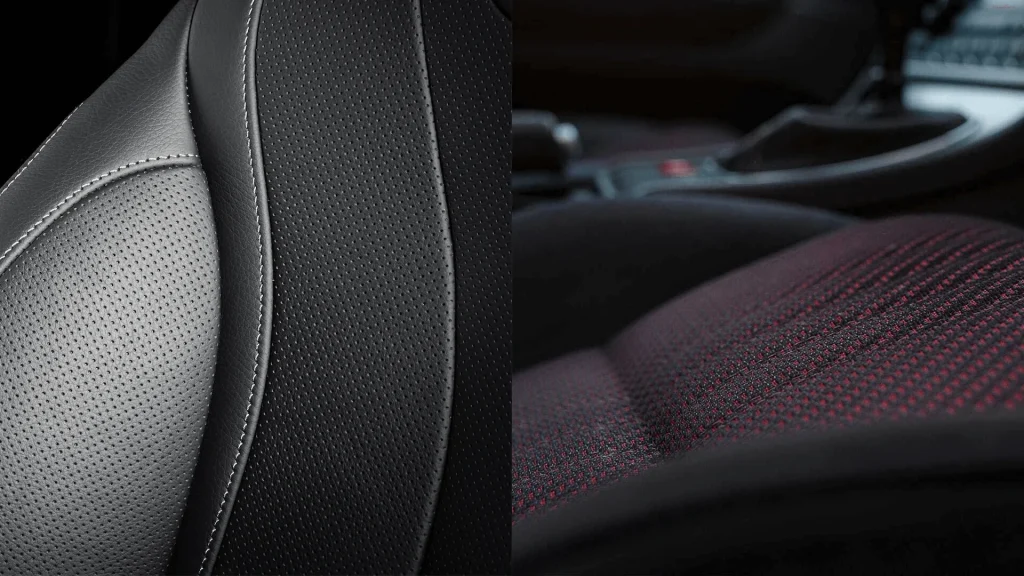
Choosing the best fabric for car seat covers is an important decision because it directly affects comfort, durability, appearance, and maintenance. Since car seats are used every day and exposed to heat, dust, moisture, and friction, the fabric must be able to withstand regular wear while remaining comfortable for both short and long drives. Among the many options available, some fabrics are more suitable than others depending on usage and personal preference.
Polyester-based fabric has become the material that tops the list of the most preferred ones for automobile seat covers. This is mainly due to the fact that the material encompasses the three main factors that are comfort, durability, and low price at the same time. Along with the years, the polyester fabric has gained the reputation of being the one that will not wrinkle, fade, or lose its original shape – all these features that make it ideal for long-term use. To add to that, it is also great at handling extreme weather conditions, which means it is quite bearable in both hot and cold seasons. If the polyester car seat covers are nicely stitched and padded, then it can even give a smooth and nice seating experience.
Another fabric that is still in demand is cotton, which is the main choice for people who give priority to comfort above everything else. Cotton is soft, breathable, and hypoallergenic, thus making the fabric faultless not only for long drives but also in hot weather and tropical climates. Its property of allowing air flow makes it able to keep sweating and discomfort at bay during summer. Nevertheless, the cotton fabric moisture and stains absorption is higher compared to synthetics thus, it might need cleaning and maintenance more frequent than they are developed to retain frozen look.
Neoprene fabric is gradually and steadily gaining the reputation of being one of the most excellent materials for car seat covers, thanks to its hardiness and protective features. Wetsuit material neoprene, water-resistant and remarkably elastic, was originally its application. It is a good choice for families, pet owners, or active and outdoor-going individuals since it protects seats from water, sweat, and dirt. Good relaxation is provided by the breathability of the neoprene as well as its cushioning soft texture which makes it suitable for everyday use.
Velour fabric offers soft plushness and comfort as its trademark. The wintery and cozy seating experience is especially in cooler regions. Velour seat covers not only enhance the beauty but also add a soft touch to the car’s interior, however, their durability can be compared to polyester and neoprene negatively. They also come with the issue of maintenance since dust and stains can easily penetrate the fabric, and if not removed properly and timely can turn into a regular but hard to get rid of issue.
Canvas fabric is suitable the most for those drivers who rate durability above any luxury. This material is heavy, strong, and resistant to tearing thus making it the best choice for that kind of baby-user or duration-user scenario. Canvas may not have the sweet personality of cotton or velour, but when it comes to the protection of the original seats from damages, it does incredibly nice work. It is very likely to be the choice for work vans or cars that are subjected to harsh environments.
To sum up, the choice of the most suitable material for car seat covers is dictated by personal requirements and way of life. For routine use, polyester is the best compromise between comfort and strength, while cotton gives the advantage of being more breathable and softer, besides, neoprene allows for very high protection and long-lasting use, velour entails luxurious comfort and canvas wins for its durability. Thus, the decision of the right fabric will make your car seats comfy, safeguarded, and good-looking for many years.
Also visit our Best Car Seat Cover
Which fabric is most durable for car seat covers?
The durability of car seat covers is frequently the most important factor when deciding on the choice. The selected fabric determines the lifetime of the covers, the amount of your upholstery they protect in the meantime, and how they resist the daily wear and tear. Just like the strengths of some fabrics, there are, however, very few fabrics that are absolutely strong and long-lasting. Here are the main reasons and the most durable car seat cover fabrics that highlight their performance.
Canvas fabric – tough and long-lasting
Canvas is truly one of the most durable materials used for car seat covers. Canvas is not only thick but also tightly woven and has a high resistance to abrasion and tearing. Canvas, being a strong material, is perfect for commercial cars, off-road vehicles, or vehicles that operate in harsh outdoor conditions. Besides offering protection against dirt, scratches, and heavy usage, it also becomes an option for those drivers who need a cover that lasts long and can withstand rough conditions over many years.
Neoprene – water-proofer durability
Neoprene fabric is also among the top selections for durability. The flexibility of neoprene enhances its strength making it the material for wetsuits. Neoprene’s non-absorbent feature keeps the seats safe from spills, moisture, and sweat, which can cause other fabrics to weaken over a period. Neoprene is also resistant to UV exposure hence it is good at keeping its shape so it doesn’t sag or become loose easily. This quality of neoprene makes it very fit for families, pet owners, and outdoor people who need tough protection but still want comfort.
Polyester – balanced strength and longevity
Polyester is a highly durable synthetic fabric commonly used in seat covers. Its resistance to fading, stretching, and shrinking facilitates its aging in terms of both appearance and function. Polyester blends with reinforced fibers, in particular, have increased tear-resistant properties and the making of covering stronger. The fabric is also easy to clean to a certain extent and it can take regular maintenance without losing its strength. Polyester is a good choice for everyday use if one is looking for a durable, comfortable, and at the same time cost-effective material.
Leather and leatherette – strong and fashionable
Leather and leatherette (also referred to as faux leather) are the materials that are known for their durability and at the same time strong appearance. Leather lasts a long time, if properly maintained, it even gets better with time, and it can resist wear to certain extent. Leatherette has similar qualities to leather but at a lower price and it also has a high resistance to spills and stains. Although both materials are durable they still need to be cleaned and conditioned once in a while to prevent cracking or stiffness especially in extreme temperature conditions. Nevertheless, if properly taken care of, leather and leatherette seat covers can last for a long time.
Ballistic nylon – strength of industrial grade
Ballistic nylon is a fabric that is extremely strong and durable and was originally developed for military purposes. It can withstand heavy rubbing and cutting as well as impact damage making it the strongest fabric for car seat covers. Ballistic nylon is not very popular and its price might be high but it is perfect for heavy-duty applications where the longest durability is the main requirement. Its tough construction makes it suitable for the frequent use and harsh environments.
Vinyl – water-proof and durable
Vinyl seat covers have been characterized by their water-proof and very durable performance. Vinyl is not going to be the softest or the nicest smelling material but it is the best option in terms of moisture resistance. Vinyl is non-absorbing, stain-proof, and easy to wash, which is one major factor contributing to its long life span. It may lose some of its softness in very cold winters and may also crack if not taken care of properly, but in general it is very tolerant in daily use.
In a nutshell, durable car seat covers can be made from a range of materials, and each one has its own particular advantages and is appropriate for different types of users. Canvas and ballistic nylon are very tough materials that can withstand heavy use but neoprene is water resistant, long-lasting and still has good durability. On the other hand, polyester is suitable for regular driving and offers a little bit of strength. Leather-like materials are tough but at the same time, they are elegant; if properly maintained, they will last and combine with a premium quality. The option of a long-lasting fabric is not merely about strength but also about one’s lifestyle, the frequency of the car usage, and the kind of protection that is most needed. If you opt for a durable fabric first, you will not only be safeguarding your car seats from wear and tear but also keeping their good look for many years to come.
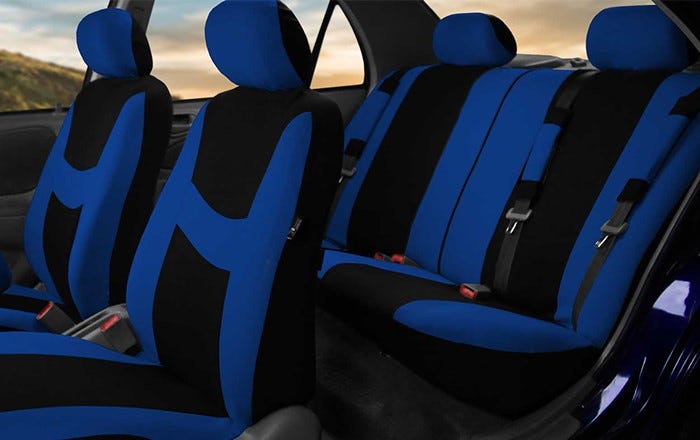
What is the best fabric for car seat covers in hot weather?
When it comes to selecting car seat covers for hot weather, breathability, heat resistance, and comfort are the main factors to be taken into account. The temperature inside cars can go up to the extreme during summer and using seats that take in and keep heat can drive one to discomfort on the road. Going for the right fabric can lead to a situation where the temperature is controlled, the sweating is lessened, and the driver and the passengers are enjoying the cooler seating experience.
Fabrics are usually the most suggested car seat covers for hot weather due to their breathability. The reason is that unlike leather or vinyl, which usually trap heat, fabric allows air to go through between the seat and the person sitting on it. The air movement helps to prevent sweating and keeps the surface temperature down, thus making the car interior more pleasant even during long trips. Especially cotton-based fabrics are extremely soft and moisture-laden so they can easily absorb sweat and, at the same time, be cool next to the skin. The natural fiber gives the user a comfortable seating experience and is, therefore, suitable for areas with continuously high temperatures.
Another material that performs well in hot weather is mesh fabric. Mesh seat covers are designed with small, open spaces that promote maximum airflow. This enhances ventilation, preventing heat buildup and reducing discomfort during summer trips. Mesh fabrics are lightweight and flexible, providing both comfort and durability. The better airflow makes them absolutely perfect in cars that are parked under the sun a lot, as they do not allow the seat to get burning hot prior to entering the vehicle.
Although leather and faux leather seat covers give a high-class appearance, they are usually not the best option for warm climates. Leather’s property of absorbing and retaining heat leads it to be quite uncomfortable during the hot days. Nevertheless, some recent leather styles have perforated covering that not only allows but also increases some degree of airflow, which can cut down on heat retention a bit. These perforated kinds are a compromise for those who want the luxury look of leather but at the same time are a little cautious about the extreme temperature effects. Yet still, when compared to breathable materials, leather covers are usually the most heat-retaining ones during the summer time.
Neoprene is a material that is very strong and resistant to water but is usually less favorable in hot places because it does not let air circulate much as its breathability is limited. When it comes to providing excellent protection against spills and wear, neoprene can also cause a sauna effect, thus making the seating surface hotter. The people in the hot areas prefer to have the durable fabrics with airflow rather than materials that are only good at toughness or water resistance.
Color selection can also be a factor that impacts the level of comfort in case of hot weather. The lighter shades will reflect sun rays and thus will absorb less heat while darker colors will be the opposite. A combination of breathable materials like cotton or mesh with a light shade can significantly increase the comfort level of the car interior during summer time.
To sum up, the most suitable material for car seat covers in hot weather is the one that mainly offers breathability, moisture-wicking capabilities, and comfort. Cotton and top-quality mesh are very good options as they can provide air flow and consequently less heat accumulated. Although leather and neoprene are more stylish and durable, they are not the best in the cooling seats under the scorching sun department. So, if you are a car owner and you want a fabric for ventilation and color brightening to ensure cooler, more comfortable, and pleasant driving experience in hot weather, just go for it.
Which car seat cover fabric is easiest to clean and maintain?
For a large number of car proprietors, one of the most significant considerations for the selection of car seat covers is their ease of cleaning and maintenance. Daily wear and tear, along with spills, dirt, dust, and other things, keep the seats constantly dirty and selecting a fabric that is easy to clean and maintain can save both time and money in the long run. Here is an outlined presentation of the fabrics that are easiest to care for, presented with clear points for better understanding.
Leather and leatherette – wipe-clean convenience
Leather and leatherette are the two most cleaning-friendly fabrics. The two materials do not absorb spills and thus it is very easy to remove the dirt, food stains, or liquid spills with just a damp cloth. Leatherette especially is quite resistant to fading and cracking provided that it is maintained well and it does not need any cleaning products that are specialized, unlike genuine leather. Regular wiping and occasional conditioning for real leather are usually sufficient to maintain appearance and durability. This makes leather-based covers an ideal choice for drivers seeking a low-maintenance solution that also offers a premium look.
Neoprene – water-resistant and durable
Neoprene seat covers are highly practical for cleaning and maintenance. Known for their water-resistant properties, neoprene protects seats from liquid spills, sweat, and pet accidents. Most stains can be wiped away easily with a damp cloth or mild detergent, and the fabric resists odors better than standard fabrics. Neoprene also maintains its shape and color over time, requiring minimal effort to keep the covers looking new. This is one of the reasons why it has become a common choice among families and outdoor lovers who regularly subject their vehicles to dirty conditions.
Vinyl – uncomplicated yet efficient cleaning
Vinyl seat covers are an additional low-maintenance option. They are entirely waterproof and highly resistant to stains, thus cleaning becomes pretty simple. Sometimes, wiping the vinyl with a cloth and mild soap is all it takes to get rid of dirt, spills, or pet hair. Although vinyl does not provide the same breathability or softness as fabric or leather, its convenience in cleaning and longevity makes it a great option for the vehicles used in job sites or by kids.
Polyester blends – easy maintenance and stain resistance
High-quality polyester fabrics and blends are meant to last long and be very easy to maintain. Polyester does not soak up liquids as quickly as natural fabrics such as cotton, and a lot of modern polyester seat covers come with protective coatings that resist stains. Generally, vacuuming of loose debris and spot-cleaning of spills with a damp cloth or mild detergent is done for cleaning. In many cases, the polyester seat covers are machine-washable, which is an added convenience for car owners who want maintenance without hassle.
Canvas – durable and easy to clean
Canvas materials are recognized for their durability and their ability to withstand heavy use. Although canvas is a bit less soft when compared with other fabric types, it is still a hassle-free fabric and can be cleaned with a simple brush or by using a damp cloth. The majority of canvas seat coverings are water-resistant or applied with protective layers, thus making them resistant to spills and dirt. The durability factor is what makes canvas a sensible selection for not only outdoor vehicles, but also for trucks and cars working in harsh environments.
In a nutshell, the easiest car seat cover fabric to clean is leather, leatherette, neoprene, vinyl, polyester blends, and canvas. Leather and leatherette come out on top as the most luxurious, wipe-clean solution, while neoprene and vinyl offer durability and waterproofing. Polyester blends yield comfort plus stain resistance and ease of machine washing, and canvas gives heavy duty protection with low upkeep. The right fabric selection will depend on your lifestyle, the use of your vehicle, and whether you place more importance on comfort or low-maintenance practicality. The selection of a fabric that is easy to clean and maintain can help car owners keep their interiors looking new and well-protected for many years to come.